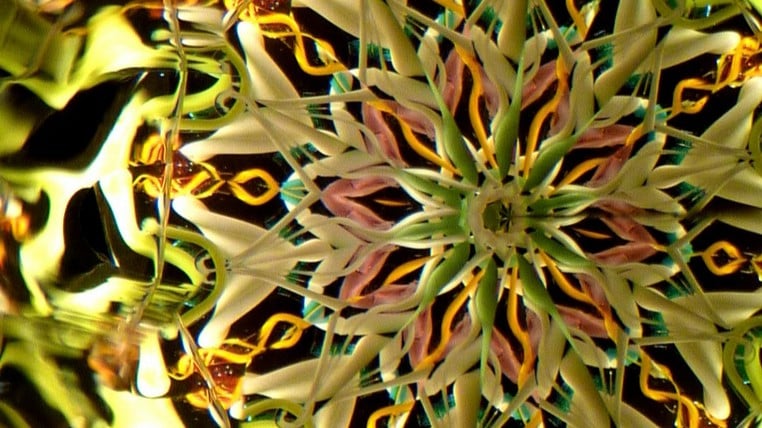
Key Takeaways
- Oil-filled kaleidoscopes use viscous liquids like mineral oil to create graceful, continuous motion that responds to the slightest movement
- Dry object cells produce quick, distinctive shifts with characteristic ‘clink’ sounds between periods of static beauty
- Technical design differences between liquid and dry systems affect weight, cost, transparency requirements, and overall viewing experience
- Understanding these motion characteristics helps collectors choose kaleidoscopes that match their preferred viewing style
The choice between oil-filled and dry object kaleidoscopes fundamentally changes the entire viewing experience. While both create stunning symmetrical patterns, the medium within the object cell determines whether patterns flow like liquid poetry or shift with dramatic precision. This distinction affects everything from the sounds the kaleidoscope makes to how often new patterns emerge.
How Liquid Changes Everything About Kaleidoscope Motion
The presence or absence of liquid in a kaleidoscope’s object cell creates two completely different kinetic experiences. In liquid-filled systems, objects suspend and drift through viscous medium, creating patterns that evolve gradually and respond to subtle movements. Steve Gray Kaleidoscopes is renowned for expert craftsmanship and innovative designs, which often include liquid-filled cells where objects move with mesmerizing grace, particularly in their oil-filled creations, where glass beads and natural stones drift through the medium.
Dry cells operate on entirely different principles. Without liquid to slow movement, objects tumble quickly from one position to another, creating sharp transitions between static compositions. This fundamental difference influences not just visual appeal, but also the interactive nature of each kaleidoscope type.
The physics behind each system determines viewing patterns. Liquid-filled scopes offer continuous entertainment as objects drift and settle into new arrangements, while dry systems provide moments of contemplation between deliberate movements that create fresh geometric displays.
Oil-Filled Cells: Graceful Floating and Continuous Movement
Mineral Oil and Glycerin Create Slow, Flowing Patterns
Liquid-filled kaleidoscope cells typically contain mineral oil, glycerin, or silicone specifically chosen for their viscous properties. These clear, thick liquids slow object movement dramatically, allowing glass beads, crystals, and decorative elements to float and drift rather than tumble. The viscosity creates a ballet-like motion where objects seem to dance through the liquid medium, constantly repositioning themselves to form new symmetrical patterns.
The choice of liquid affects both visual quality and movement characteristics. Mineral oil provides excellent clarity while maintaining the proper thickness to suspend objects effectively. Glycerin offers similar properties but can be slightly denser, creating even slower, more deliberate movement patterns that some collectors prefer for meditation or relaxation viewing.
Objects Respond to the Slightest Viewer Movement
One remarkable characteristic of liquid-filled systems is their sensitivity to movement. Even the smallest tilt or rotation from the viewer sets objects in motion, creating a responsive viewing experience where the kaleidoscope seems alive. This responsiveness means patterns are constantly evolving, with objects settling into new positions long after the initial movement stops.
The continuous motion eliminates the need for deliberate shaking or turning that dry systems require. Simply holding a liquid-filled kaleidoscope creates gentle movement as natural hand tremor and breathing cause subtle shifts that keep objects in gentle, perpetual motion throughout the viewing session.
Weight and Cost Considerations for Liquid-Filled Scopes
Liquid-filled kaleidoscopes are notably heavier than their dry counterparts due to the added weight of the liquid medium. This weight increase affects both portability and manufacturing costs, as shipping and handling require more robust packaging. The liquid also introduces potential leak risks that manufacturers must address through superior sealing techniques and quality materials.
Cost factors extend beyond materials to include specialized assembly processes required for liquid-filled systems. The precision needed to create leak-proof seals and the quality control necessary to ensure long-term integrity typically result in higher retail prices compared to dry object kaleidoscopes of similar exterior quality.
Dry Object Cells: Quick Shifts and Distinctive Sounds
The Characteristic ‘Clink’ of Moving Objects
Dry object kaleidoscopes create a distinctive auditory experience alongside their visual appeal. The characteristic ‘clink’ sound occurs when glass beads, crystals, or metal objects collide and settle against the cell walls during movement. This sound becomes part of the kaleidoscope’s charm, creating a multisensory experience that many collectors find deeply satisfying.
The acoustic properties vary depending on object materials and cell construction. Glass beads produce crisp, bell-like tones, while metal elements create sharper clicks. The sound serves as immediate feedback, adding an element of sound that compliments the shifts in the visual experience.
Static Beauty Between Movements
Unlike liquid-filled systems with constant motion, dry cells create moments of perfect stillness between movements. These static periods allow viewers to study intricate pattern details without distraction, making dry systems particularly appealing for detailed examination of color relationships and geometric precision. The stillness creates anticipation for the next deliberate movement that will transform the entire composition.
This characteristic makes dry kaleidoscopes excellent for photography or detailed study, as patterns remain stable once objects settle. The deliberate nature of pattern changes allows viewers to control their experience, choosing when to create new arrangements versus when to contemplate existing ones.
Technical Design Differences That Matter
Why Entire Tubes Aren’t Filled with Liquid
Kaleidoscope optical design focuses on objects positioned at the specific focal point of the mirror system, typically at the tube’s end. Filling an entire tube with liquid and objects would create focus issues that blur or distort the reflected image, defeating the kaleidoscope’s fundamental purpose of creating sharp, clear symmetrical patterns.
The concentrated object cell design also addresses practical concerns. A fully liquid-filled tube would significantly increase weight and manufacturing costs while creating substantially higher leak risks. The focused approach allows liquid systems to achieve their flowing motion benefits while maintaining structural integrity and optical precision.
Transparency Requirements for Oil-Filled Systems
Oil-filled kaleidoscopes require highly transparent liquid to prevent optical distortion. Any cloudiness or impurities in the liquid create path length differences that can alter object colors or reduce pattern clarity. This requirement drives the selection of premium oils and careful filtration processes during assembly.
The transparency standard affects long-term maintenance as well. High-quality oils resist yellowing and maintain clarity over time, while lower-grade liquids may develop haze that diminishes the viewing experience. This quality difference explains price variations among liquid-filled kaleidoscopes from different manufacturers.
Object Movement Mechanisms: Liquid Flow vs Dry Tumbling
Movement mechanics differ fundamentally between systems. In liquid-filled cells, objects move through fluid dynamics, with heavier elements settling while lighter ones float, creating natural stratification that adds complexity to pattern formation. The liquid’s resistance creates smooth, flowing transitions between positions.
Dry systems rely on gravity and momentum for object movement. Quick tilting causes objects to tumble rapidly to new positions, while gentle movements may only shift a few pieces. This mechanical difference gives viewers more direct control over pattern changes in dry systems compared to the organic evolution of liquid-filled designs.
Cell Rotation Options Available for Both Types
Both liquid and dry systems can incorporate rotating cells that turn independently of the main kaleidoscope body. This feature allows viewers to create pattern changes without tilting the entire instrument, which is particularly valuable for parlor-style kaleidoscopes mounted on stands.
Rotation mechanisms must account for the different movement characteristics of each system. Liquid-filled rotating cells create continuous motion as rotation disturbs the liquid flow, while dry rotating cells produce distinct pattern changes with each rotation increment, often marked by the characteristic clicking sounds as objects resettle.
Choosing Between Oil and Dry Based on Your Viewing Preferences
The decision between oil-filled and dry object kaleidoscopes ultimately depends on personal viewing preferences and intended use. Liquid-filled kaleidoscopes excel for relaxation and meditation, offering continuous, gentle movement that creates an ever-changing display perfect for stress relief or contemplative viewing sessions.
Dry kaleidoscopes appeal to viewers who prefer more control over their experience. The ability to create deliberate pattern changes and study static compositions makes them ideal for detailed examination, photography, or sharing specific patterns with others.
Steve Gray Kaleidoscopes
1140 Old Jerome Highway
Clarkdale
Arizona
86324
United States