
Xi’an City, Shaanxi Province,China – November 9, 2026
Here’s the deal with Mango Matcha – it’s a lovely combo of ripe, tropical mango and matcha’s grassy, slightly bitter kick. But if you’re sourcing this for your market, a promising flavor is only half the story. You also need to ensure the color, aroma, sweetness, and texture stay consistent across batches. What tastes great in a tiny sample cup might not perform the same way in a bottled drink, a dessert, or a powdered blend. And honestly, those details can make or break a product.So, this guide for 2026 is all about helping you, the buyer, check out suppliers—like really dig into whether they’re a good fit. You’re gonna want to look at how transparent they are with sourcing, and if they’re actually ready to export. But the real practical stuff? We’re talking questions like: Do they clearly say what matcha grade they’re using? And do they hand over the ingredient lists, batch records, and all that quality paperwork? Also, can they do the mango part as a puree, powder, or flavoring—depending on what you need for your product? Also, buyers should touch base with each company directly to nail down the MOQs, packaging options, lead times, and if they can get samples. These things have a way of changing depending on where you are and what time of year it is.Look, there’s no one-size-fits-all when it comes to suppliers. A coffee shop might care about vibrant colors and quick brewing, but a big beverage company? They need consistent flavor across every batch. Sure, price is a big deal, but a super low quote often hides extra costs. And honestly, it’s hard to figure that out just by looking. So treat what suppliers say as a starting point—test their samples, ask for documentation, and only then decide. Our shortlist is meant to help you with that, but it’s not a substitute for actually trying things out or getting independent checks.
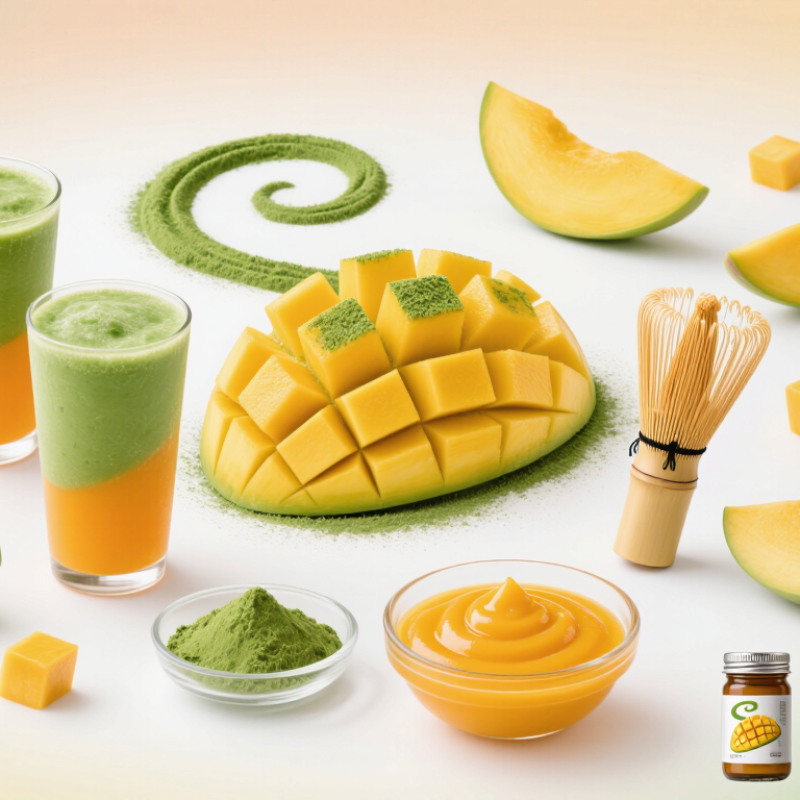
Defining Mango Matcha: Matcha Grade, Mango Form, and °Brix
For global buyers, “mango matcha” needs a precise specification, not just a flavor name. Matcha grade has no single universal grading ladder, so ask for harvest season, leaf preparation, particle size, color, and sensory profile. A vivid green powder with fine particles may suit whisked drinks; a more assertive, slightly astringent lot can hold up better in sweetened blends. Request a sample and compare it in the intended recipe. Dry-powder tasting alone can mislead.Mango form changes both texture and flavor. Puree adds body and pulpy fruit notes; juice concentrate blends more smoothly but may shift sweetness and acidity; powder is convenient, yet can taste cooked or dusty. Check the ingredient specification and test for separation after mixing. °Brix helps quantify soluble solids, but it does not measure sweetness alone. Codex CXS 247-2005 lists 13.5 °Brix as the minimum for reconstituted mango juice, a useful reference point—not a universal target for puree or matcha beverages. Ask suppliers to state the measurement method and sample temperature. Small details matter. A practical trial should record matcha percentage, mango form, °Brix, pH, and settling after ten minutes. Results can still vary by crop and processing lot; that deserves a second check.
How to read this chart: °Brix indicates soluble-solids concentration in a liquid. Typical values vary by fruit, processing, and supplier; verify each product’s specification. Mango powder is omitted because °Brix is not directly comparable for a dry ingredient. Matcha grades such as ceremonial and culinary are market descriptions, not universally standardized grades.
Mapping Supplier Origins: Japanese Matcha and Global Mango Hubs
Japanese matcha and mango often come from very different supply networks. Matcha buyers may look to established growing areas in Japan, including Uji and Nishio, where shaded cultivation and careful milling shape color, aroma, and texture. Origins alone do not guarantee quality. Ask suppliers for harvest details, milling dates, and batch-specific specifications.Mango sourcing is more geographically varied. India, Thailand, Vietnam, Mexico, and Peru all support commercial mango production, with harvest windows that differ by region. For Mango Powder, ask whether fruit is dried or spray-dried, and request moisture, color, and particle-size data. A bright sample can still lose aroma during storage. I have seen sourcing plans underestimate this risk; packaging and transit conditions deserve more attention than they often get.Tips: Request recent samples from the actual production batch, not just a catalog sample. Check matcha for a clean, fresh aroma and mango powder for a clear fruit profile. Compare certificates and traceability records, then confirm whether the quoted season matches your delivery schedule. Small details matter. And some supplier documents may need closer review.
Comparing 2026 Suppliers by MOQ, Capacity, Lead Time, and Price per Kilogram
For 2026 mango matcha sourcing, compare the offer, not just the price. FAOSTAT’s 2022 Crops and Livestock Products dataset reports roughly 59 million tonnes of mangoes, guavas, and mangosteens combined. It does not isolate mango puree suitable for powdered blends. Japan’s Ministry of Agriculture, Forestry and Fisheries tracks tea categories in its tea statistics, which can help buyers assess supply context. Neither dataset verifies a supplier’s available stock.
Request MOQ in kilograms of finished product, monthly capacity for the specified grade, sample-to-shipment lead time, and price per kilogram under the same Incoterm. Ask whether stated capacity means installed output or volume actually available to your order. Compare mango format, matcha grade, moisture limits, packaging, and test documentation. A bright green sample can still vary after blending. Small lots often cost more.
Public reports do not provide standardized 2026 prices or lead times for mango matcha suppliers, so unsupported rankings can mislead. Request itemized quotations from several suppliers, with freight and packaging shown separately. Check whether the quoted price covers a pilot batch or repeat production. I would not treat a short lead time as proof of dependable capacity; that assumption needs checking against recent shipment records.
Quality Benchmarks: Typical 14–18 °Brix Mango Purée and ≤6% Matcha Moisture
For global buyers, 14–18 °Brix is a useful working range for mango purée, not a guarantee of flavor. °Brix estimates soluble solids and helps buyers compare sweetness and consistency between lots. Check a representative, well-mixed sample with a calibrated refractometer. Small sampling differences can shift readings. They happen.Matcha with moisture at or below 6% is a practical benchmark for powder handling and storage. Still, moisture alone cannot confirm freshness or suitability. Ask for batch-specific test results, production dates, and storage guidance. Inspect color and aroma as well; dull green powder or a stale, grassy smell deserves follow-up. Packaging matters, especially after opening, because humid air can affect powder quality.Suppliers should explain how their measurements are taken and whether results come from routine quality checks or outside testing. Request samples from the lot under consideration. Then test the ingredients in the intended drink or food, checking sweetness, color, texture, and settling after mixing. A purée can meet the °Brix range yet taste too tart for a particular recipe. That is an inconvenient detail, but a small trial often reveals it before a larger order.
2026 Top Mango Matcha Suppliers for Global Buyers – Quality Benchmarks: Typical 14–18 °Brix Mango Purée and ≤6% Matcha Moisture
| Sourcing Profile | Mango Purée Benchmark | Matcha Benchmark | Useful Buyer Checks | Common Supply Format | Potential Application |
|---|---|---|---|---|---|
| Indian mango processor paired with an established tea exporter | Target 14–18 °Brix; confirm variety, season, and whether the purée is single-strength or concentrated. | Request moisture results, with ≤6% as the stated purchasing benchmark; specify grade and intended use. | Check lot-specific certificate of analysis, microbiological results, pesticide-residue documentation, and ingredient traceability. | Aseptic bags or drums for purée; sealed, light-protective packs for matcha. | Beverages, dessert bases, and food-service blends. |
| Thai tropical-fruit processor paired with a regional matcha supplier | Use 14–18 °Brix as a screening range; verify color, flavor, and consistency against an approved sample. | Set a moisture limit of ≤6% and request a recent, batch-specific laboratory report. | Confirm processing method, allergen controls, country of origin, shelf-life conditions, and export documentation. | Bulk aseptic or frozen purée; moisture-barrier matcha packaging. | Frozen desserts, smoothies, and ready-to-mix powders. |
| Mexican fruit processor paired with an international tea ingredient distributor | Compare measured °Brix with the agreed specification; record any added sugar or other ingredients separately. | Request moisture testing and a specification for color, aroma, and particle size. | Review product specification, lot coding, food-safety certification scope, and shipping-temperature requirements. | Frozen or aseptic purée; sealed bulk or retail-ready matcha formats. | North American beverage and bakery production. |
| European fruit-ingredient importer paired with a specialist tea importer | Require a declared °Brix range and verify it on receipt using an agreed sampling method. | Set ≤6% moisture as a buyer-defined acceptance limit; specify storage and packaging to limit moisture pickup. | Check applicable food-law documentation, traceability, pesticide-residue compliance, and packaging suitability. | Food-grade drums or bag-in-box purée; sealed, moisture-protective matcha packs. | Manufactured beverages, dairy alternatives, and confectionery. |
| China-based tea ingredient exporter paired with an Asia-Pacific fruit processor | Specify 14–18 °Brix where suitable for the recipe; confirm whether values are measured before or after any blending. | Request moisture ≤6% and identify the test method and sampling date on the report. | Evaluate batch consistency, origin records, contaminant testing, sample-to-bulk match, and lead time. | Bulk purée in aseptic or frozen format; sealed food-grade matcha packs. | Cost-sensitive beverage mixes and large-volume food manufacturing. |
| Buyer note: These are illustrative sourcing profiles and procurement benchmarks, not verified rankings or supplier-specific claims. Actual °Brix and matcha moisture vary by product, processing, and test method. Confirm specifications, certificates of analysis, food-safety documents, and samples directly with each prospective supplier. |
Verifying Safety: Certificates of Analysis, Microbial Tests, and Pesticide MRLs
For global buyers sourcing Mango fruit Powder, a Certificate of Analysis should identify the exact lot, test date, methods, and results—not just say “passed.” Check that the laboratory is accredited for the methods used. Request microbial results for Salmonella and indicator organisms, plus yeast and mold where relevant. A dry powder can still be contaminated. A clean-looking sample proves little. Ask whether sampling covered a representative portion of the shipment, and whether results are reported with units and detection limits. This detail is easy to overlook.
Pesticide results should list detected residues and compare them with the applicable maximum residue limits for mango and the product’s destination market. EFSA’s 2022 pesticide-residue report assessed 110,829 food samples; 96.3% were within legal limits. That broad result is useful context, not proof about any supplier’s powder. WHO estimates that contaminated food causes about 600 million illnesses worldwide each year, underscoring why microbial controls matter. Buyers should review the test method, sampling plan, and any corrective action alongside the CoA. A “not detected” result also depends on the method’s detection limit. Ask for clarification when a report leaves that unclear.
Assessing Export Readiness: Certifications, Packaging, Shelf Life, and Incoterms
For global buyers, export readiness starts with documents that match the product and destination. Ask suppliers for current certificates, their scope, and the issuing body; a certificate alone does not prove every batch meets your specification. Request a recent certificate of analysis covering moisture, microbiological limits, and relevant contaminants. Mango Powder for health food may need additional checks based on its intended use and destination market. Confirm requirements with your importer, too. Details can be missed.
Packaging should protect the powder from moisture, oxygen, and light. Ask for food-contact packaging specifications, inner-liner details, carton strength, and pallet configuration. Shelf-life claims should be supported by stability data, not just a date printed on a label. Check storage conditions and whether the stated life applies to unopened packs. A warm warehouse can change the picture.
Tips: Request sample labels and a batch-traceability example before placing an order. Compare Incoterms by naming the exact delivery point; “shipping included” is not precise. Clarify who handles export clearance, freight, insurance, and risk transfer. Keep written records of agreed specifications and packaging changes.
Selecting a Supplier: Sample Testing, Traceability, and Contract Terms
A supplier’s product sheet cannot tell you how mango and matcha behave together. Request a production-representative sample, not a specially prepared showcase batch. Taste it in water and in your intended recipe. Note the mango aroma, matcha bitterness, color, and whether the powder clumps after mixing. Taste it plain. Small details matter.
Ask for a lot-specific certificate of analysis and traceability records linking the sample to its ingredient origins and processing batch. For Organic Mango Fruit Powder, check that organic documentation covers the actual product and relevant supply chain, rather than relying on a broad marketing claim. Agree on suitable tests for moisture, microbiological quality, and other specifications with a qualified laboratory. Results need context; a pass on paper does not guarantee a stable flavor in your finished blend.
Put measurable requirements in the contract: ingredient composition, particle size, color range, packaging, shelf life, and acceptable test methods. Include sample approval, change notification, delivery windows, and a process for handling out-of-specification lots. Define who pays for retesting and what happens if a shipment fails agreed criteria. Keep records. A spreadsheet can make comparisons easier, but it may hide inconsistent sample conditions. Review the assumptions before signing, and revisit them when the formula or production process changes.
Conclusion
This guide helps global buyers evaluate Mango Matcha suppliers by looking beyond product descriptions. It explains how matcha grade, mango form, and °Brix influence flavor and consistency, and how sourcing regions may affect availability. A practical comparison of minimum order quantities, production capacity, lead times, and price per kilogram can help buyers identify options suited to their needs. The guide also outlines useful quality benchmarks, including mango purée typically ranging from 14–18 °Brix and matcha moisture at or below 6%, while emphasizing that specifications should be confirmed for each product.Before placing an order, buyers should review certificates of analysis, microbial results, pesticide residue documentation, export certifications, packaging, shelf life, and proposed Incoterms. Requesting samples, checking traceability records, and agreeing on clear contract terms can reduce uncertainty and support consistent supply. These steps provide a structured way to assess product quality, readiness for export, and supplier reliability.
About us
Summit Ingredients Co., Ltd. was established in 2015 and is Located in Weinan City, Shaanxi Province, at the northern foot of the Qinling Mountains in China. With its superior geographical location and abundant natural plant raw materials, it focuses on the research, development, production and sales of Botanical extracts, fruit and vegetable powders and solid beverages etc. We also provides professional OEM/ODM services and has established the firm and reliable professional image in the industry.
Media Contact
Company Name: Summit Ingredients Co., Ltd.
Contact Person: Media Relations
Email: Send Email
Country: China
Website: https://www.summitingredients.com/
Press Release Distributed by ABNewswire.com
To view the original version on ABNewswire visit: Leading Mango Matcha Suppliers Gain Attention from Global Buyers in 2026


